
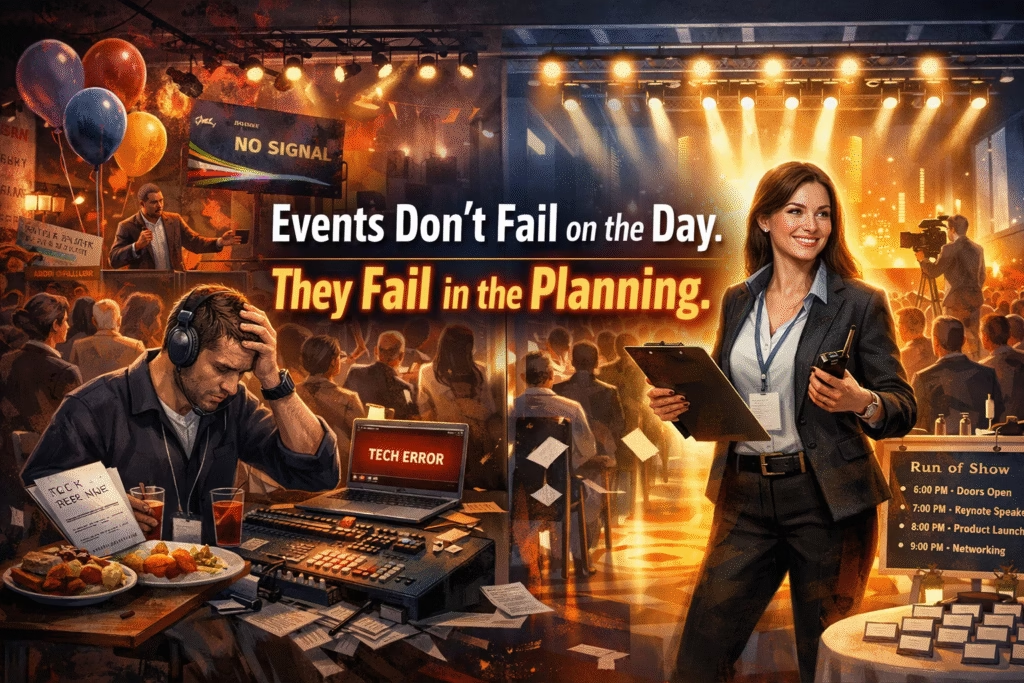
Most people blame the day.
The sound cut out. The crowd was dead. The speakers ran late. The screens glitched. The food arrived cold. Someone forgot the VIP list. The host panicked. The brand looked cheap. The audience left early.
They call it “bad luck.”
It’s not bad luck. It’s bad planning.
Events don’t fail because one thing went wrong. They fail because the entire thing was built on a weak foundation, so one small problem turns into a chain reaction. A real event is a live production with no pause button. That means your “plan” can’t be a few WhatsApp messages, a Canva poster, and a vendor list. You need structure. You need timing. You need a run-of-show that actually matches reality. You need contingencies. You need someone in charge who doesn’t freeze the moment something breaks.
The reason so many events flop is simple. People treat event management like decoration. They focus on banners, backdrops, balloons, and aesthetics. Then they wonder why the event felt flat. A good-looking event can still be a mess if the experience is clumsy. And the experience is what people remember. The experience is what decides whether the brand gains credibility or loses it.
An event has one core job: to create a controlled moment where attention, emotion, and trust all rise at the same time. That’s why events work when they’re done properly. They compress what normally takes weeks of marketing into a few hours of reality. People see, feel, hear, interact, and decide. When it’s executed well, the brand feels bigger than it is. When it’s executed poorly, the brand feels amateur, even if the product is solid.
Most failures start long before the doors open, with a simple mistake: no clear objective. If you ask ten organizers what the goal is, you’ll get vague nonsense. “Brand awareness.” “Community building.” “Engagement.” “Networking.” Those are not goals. Those are words people use when they don’t want to pick a measurable outcome. A real objective is specific. Is the event meant to sell tickets, generate leads, close deals, launch a product, announce a partnership, recruit talent, build press coverage, or create content for months? Different goals require different formats, different staging, different pacing, and different success measurements. If you don’t decide the outcome first, everything else becomes random.
Once the objective is clear, the next problem is the audience. Most events are marketed to “everyone,” which means the room ends up filled with the wrong people or not filled at all. A good event is built like a story written for a specific reader. If your audience is corporate decision-makers, the event needs credibility, efficiency, comfort, and clear value. If your audience is youth culture, the event needs energy, social currency, and moments designed for sharing. If your audience is niche professionals, it needs depth, relevance, and respect for their intelligence. You don’t create one “general” event and hope it lands. You design the room around the mind of the attendee.
And then comes the part most people underestimate: the journey. People think the event begins when the host speaks. No. The event begins the moment someone sees the invite or the ad. Their first impression starts forming right there. If the invite looks cheap, the event feels cheap before it even happens. If registration is confusing, the event feels disorganized before they arrive. If parking is a nightmare, you’ve already burnt their mood before the first song plays. Event experience is a chain. Break it early, and you spend the rest of the day trying to recover a feeling you already destroyed.
This is where proper planning becomes non-negotiable. A real event plan isn’t a checklist. It’s a system. It defines roles so there’s no “I thought you were handling it.” It defines timing so the day doesn’t become chaos. It defines dependencies so you know what must happen before something else can happen. It defines decision authority so problems get solved, not debated. A crew without structure turns into a crowd. And crowds don’t produce events. They produce confusion.
The run-of-show is the backbone. It’s the truth serum. It exposes fantasy. If you’ve planned a five-minute transition that actually takes fifteen, your entire program collapses. If you’ve stacked the agenda with too many speeches, the room dies. If you’ve placed the emotional peak too early, the rest of the event feels like a slow decline. If you don’t understand pacing, you’ll have “dead air,” and dead air is where people pull out their phones and mentally exit the room.
Pacing is not a creative detail. It’s psychology. Humans don’t stay engaged in a flat line. Engagement rises and falls. A good event designs that curve. It builds anticipation, delivers moments, gives breath, then hits again. When you watch a great event, it feels effortless. That “effortless” feeling is the result of brutal planning behind the scenes.
Production is where amateurs get humbled. Audio, lighting, staging, screens, camera feeds, power, and backups are not optional details. They are the event. People forgive a simple set. They do not forgive bad sound. Bad sound makes everything feel cheap. It doesn’t matter if the speaker is brilliant; if people can’t hear properly, they disconnect. And once they disconnect, you’ve lost the room.
Then there’s the invisible killer: logistics. Entry flow. Crowd management. Seating logic. VIP handling. Signages. Toilets. Temperature. Waiting time. All the unsexy things people ignore until they ruin the day. Attendees don’t describe these details directly, but they feel them. They label the event “well organized” or “a mess,” and that label sticks to the brand.
Most organizers also forget the post-event reality. They plan the day like it’s the finish line. It’s not. The day is the spark. Post-event is where the value multiplies. If you collect no leads, you’re wasting potential. If you capture no content properly, you’re throwing away months of marketing assets. If you do no follow-up, you’re letting warm attention go cold. A smart event creates an afterlife. It turns one day into weeks of conversations, clips, posts, press mentions, retargeting, and sales follow-ups. That’s how events become growth machines instead of expensive parties.
And yes, things will go wrong. They always do. That’s not the problem. The problem is when there’s no contingency plan and no calm leadership. Real event management isn’t about pretending you can control everything. It’s about preparing so that when something breaks, the audience never feels the panic. The best events are not the ones where nothing went wrong. They’re the ones where things went wrong and nobody noticed.
If we’re being honest, most event failures are ego failures. People want the spotlight without respecting the process. They want the applause without building the machine that creates it. They want to look like they’re running something big, but they don’t want to do the boring work that prevents disaster. That’s why the event looks good on Instagram but feels horrible in real life. And people can tell. They might smile and take photos, but inside they’re thinking, “This is sloppy.” That thought is a brand wound.
A successful event feels tight. It feels intentional. It feels like someone smart was in control. It respects time. It respects the audience. It respects the brand’s reputation. It’s not “perfect.” It’s professional. And professionalism is what builds trust.
So if an event failed, don’t blame the day. The day was just where the consequences finally showed up. The real failure happened in the weeks before, when planning was treated like an afterthought and execution was left to chance.
That’s the difference between an event that creates momentum and an event that becomes an expensive lesson.